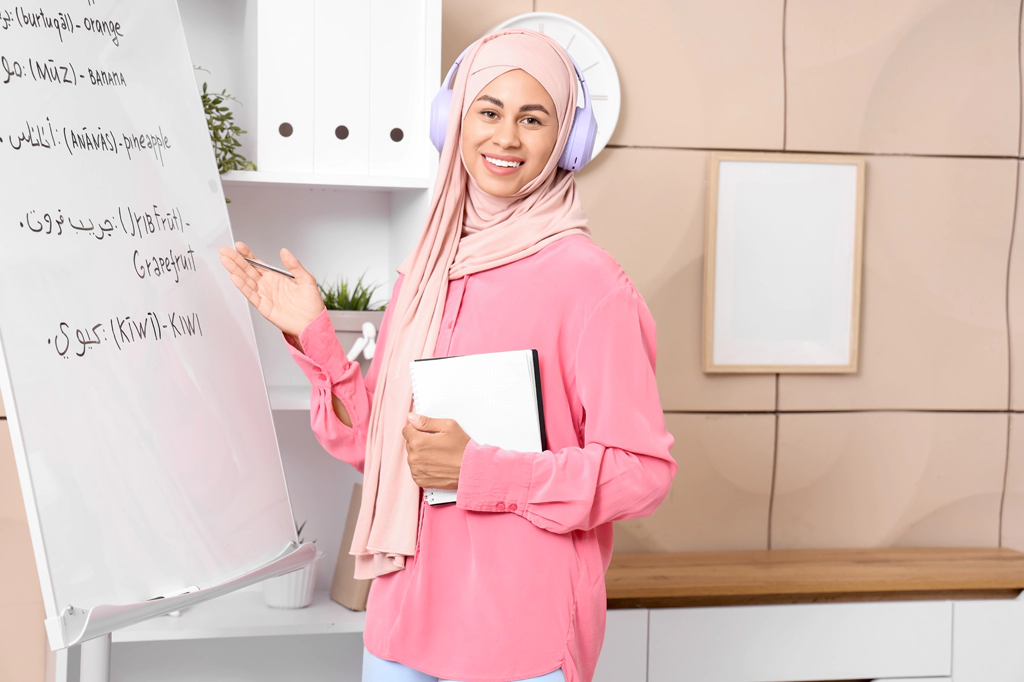
Moving to a GCC country can be exciting, but it can also feel new in many small ways. You may see Arabic on shop signs, road signs, and public notices. People may greet each other differently, and daily tasks may involve words and phrases that are unfamiliar to you. For many people, English is enough to manage basic life in the Gulf. But learning Arabic can make life much easier and more meaningful.
The Gulf Cooperation Council (GCC) countries include Saudi Arabia, the United Arab Emirates, Qatar, Kuwait, Bahrain, and Oman. These countries attract people from around the world for work, business, education, travel, and family life. While English is widely used in many workplaces and urban areas, Arabic remains the primary language across the region. It plays an important role in local culture, government services, social interactions, and everyday communication.
You do not need to become fluent overnight. Even simple Arabic can help you greet people, ask questions, understand basic signs, and feel more confident in public places. With regular practice, Arabic can also support your career, your relationships, and your overall experience in the GCC.
Here are five key benefits of learning Arabic in GCC countries.
1. Arabic can improve your career opportunities
Many employers in GCC countries value people who can speak both English and Arabic. This does not mean every job requires Arabic, but it can give you an advantage. It shows that you understand the local environment and that you are willing to make an effort.
Arabic can help in many industries, including healthcare, education, hospitality, banking, retail, real estate, construction, tourism, media, customer service, and government related work. In these fields, professionals often speak with local clients, customers, patients, parents, suppliers, or officials. When you understand Arabic, you can handle these conversations with more comfort.
For example, a nurse who understands simple Arabic may communicate better with patients. A teacher may connect more easily with parents. A hotel employee may offer better support to Arabic speaking guests. A sales professional may build stronger trust with local customers.
Arabic can also help people who want to grow into senior roles. Managers often deal with local teams, business partners, and official processes. Even if meetings happen in English, Arabic knowledge can help you understand context, tone, and small details that others may miss.
For business owners, Arabic can open more doors. Many people in the Gulf value personal connection and trust. When you use Arabic greetings or simple phrases in a meeting, it can create a warmer impression. It shows respect for the culture and helps start conversations in a more natural way.
2. Daily life becomes easier
Life in a GCC country involves many small interactions. You may need to speak with a taxi driver, ask for directions, visit a clinic, speak to building security, shop at a local market, or complete a service request. English may work in many places, but Arabic can make these moments smoother.
Arabic appears on road signs, shop boards, menus, bills, public notices, government forms, and mobile service messages. When you understand basic Arabic, you do not feel lost as often. You can read simple words, recognise important instructions, and ask for help when needed.
Simple Arabic phrases can also make daily communication friendlier. Greetings such as “assalamu alaikum” and “shukran” are easy to learn and widely used. People often appreciate it when you try to speak their language, even if your pronunciation is not perfect.
This can be especially useful outside large business areas. In smaller towns, local markets, older neighbourhoods, public offices, or traditional shops, English support may be limited. Arabic can help you explain what you need without depending completely on translation apps or other people.
Over time, this builds independence. You start to manage more tasks on your own. You feel more settled. You may also feel less nervous in places where Arabic is the main language.
3. You understand the local culture better
Arabic is more than a language. It gives you a closer look at the culture of the Gulf. Many customs, greetings, values, and social habits become easier to understand when you know the language behind them.
In GCC countries, polite expressions matter a lot. People often use greetings, blessings, thanks, and respectful phrases in daily conversations. When you learn these expressions, you also learn when and how to use them. This helps you communicate in a more respectful way.
Arabic can also help you understand important occasions such as Ramadan, Eid, weddings, family gatherings, and community events. You may hear common phrases, invitations, wishes, or announcements during these times. When you understand them, you feel more included.
This cultural understanding also helps in the workplace. Communication in the Gulf often values respect, patience, and relationship building. Knowing Arabic can help you understand these expectations better. It can also help you avoid small misunderstandings that may happen when people come from different cultural backgrounds.
For students, Arabic can make school and community life richer. They can understand more of the environment around them, speak with Arabic speaking classmates, and connect with local traditions. For families, it can make life in the GCC feel less temporary and more connected.
4. Arabic can support business and networking
The GCC region has a strong business environment. People come here to work in trade, real estate, finance, consulting, hospitality, technology, education, and many other sectors. If you work with local clients or partners, Arabic can become a useful business skill.
Business relationships often grow through trust. When you speak even a little Arabic, it can help you build that trust. It shows that you respect the local language and that you want to understand people better.
Arabic also helps you understand local business manners. You learn how people greet each other, begin meetings, show respect, and build relationships before discussing work. These details may seem small, but they can make a real difference in professional settings.
In a competitive market, language can help you stand out. Your technical skills matter, but your ability to connect with people matters too.
5. You gain confidence and personal growth
Learning Arabic can feel challenging at first. The script is different from English, some sounds may be unfamiliar, and learners often need time to get comfortable with Arabic grammar and sentence patterns. But this is also what makes the learning journey rewarding.
You can start small – learn greetings, numbers, directions, common questions, and everyday phrases. Then move to simple reading, short conversations, and workplace words. Each step helps you feel more confident.
The first time you understand a sign, answer a simple question, or order something in Arabic, you may feel a real sense of progress. These small wins encourage you to keep learning.
Arabic also helps personal growth. It improves listening skills, memory, focus, and patience. It teaches you how another culture expresses respect, warmth, humour, and hospitality. This can change the way you see the people and places around you.
For families living in GCC countries, Arabic can also bring practical benefits. Parents may communicate better with schools, neighbours, and local services. Children may feel more comfortable with Arabic speaking classmates. The whole family may feel more involved in the community.
Conclusion
Learning Arabic in GCC countries can make life easier, richer, and more connected. It can support your career, improve daily communication, deepen cultural understanding, strengthen business relationships, and build confidence.