
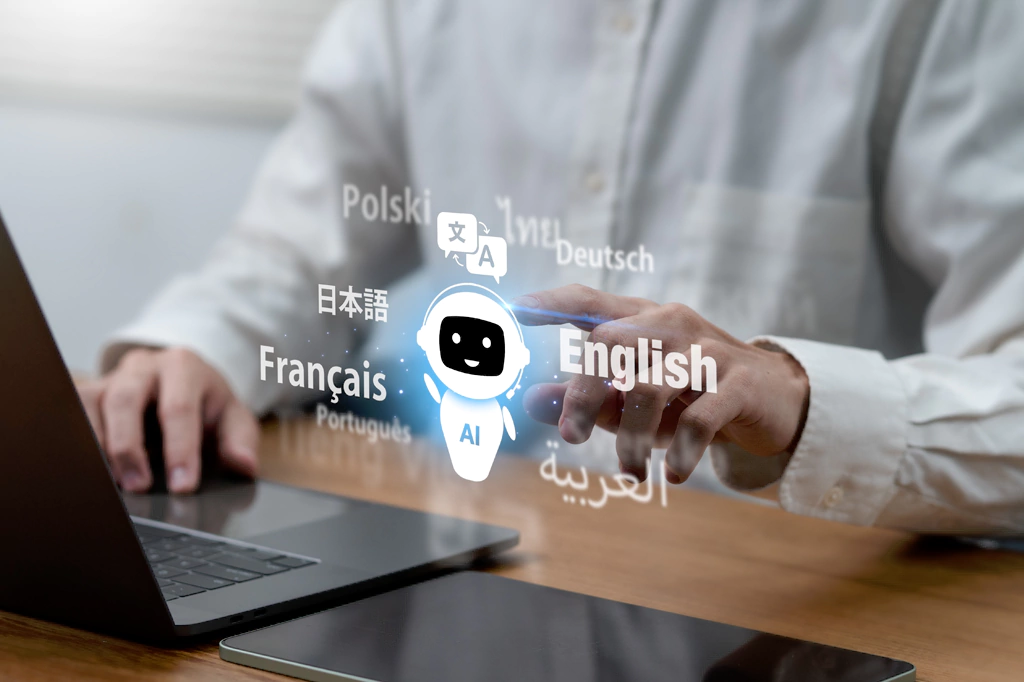
Artificial intelligence no longer belongs to distant fantasy. It now breathes inside classrooms, mobile phones, and corporate boardrooms. The field of education experiences this wave of technology very strongly, and language learning leads much of this change. The classroom that once felt fixed and predictable now feels lively with digital tools and smart systems that adjust to each learner.
So, let’s see how it changes our learning.
How Does Language Learning Change with AI?
Traditional methods still play a key role in language learning. Textbooks and grammar drills will continue to be important. But with AI, we realised that these methods often ignore individual pace and personal ambition. A uniform syllabus, for example, cannot fully satisfy a room of diverse learners.
In cosmopolitan settings such as the UAE, expectations stretch far beyond rigid curricula.
- Business people look for very specific business vocabulary.
- Students need strong academic language skills for international exams.
- Hospitality workers require clear and polite English for daily conversations with guests.
So, technology now plays a strong role in shaping these expectations. Learners expect flexible options such as evening online classes and intensive weekend courses. They expect digital dashboards that track progress with microscopic detail. More importantly, they demand tailored feedback that points out specific areas.
Overall, artificial intelligence satisfies demands through sophisticated computational systems and adaptive modeling.
The Rise of Intelligent Language Systems
AI relies heavily on Natural Language Processing, which enables machines to interpret syntax and semantic nuance. Through this capability, software can evaluate your grammar usage and contextual accuracy. This helps you receive immediate corrections rather than delayed commentary.
Machine learning algorithms further enhance this ecosystem. Supervised learning models analyse large data sets of speech and writing, while unsupervised learning identifies hidden linguistic patterns without explicit instruction. Plus, reinforcement learning systems adjust difficulty levels based on user performance. As a result, each learner experiences a dynamic curriculum rather than a static syllabus.
Chatbots now simulate conversation with surprising fluency. These digital speakers provide judgment-free practice environments, so learners can rehearse greetings and negotiations without social anxiety. For example, a timid student may practice business introductions repeatedly until confidence blossoms.
Personalisation and Adaptive Mastery
One of the most profound impacts of artificial intelligence involves personalisation. Regular classrooms often progress according to collective averages. Because of this, fast learners may feel bored by repeated lessons, while slower learners may feel stressed when topics change too quickly. AI solves this problem by adjusting the order and speed of lessons to match each student’s needs.
Smart systems study performance data very carefully. They notice repeated grammar mistakes and missing vocabulary knowledge. Then they change the tasks to focus on those weak areas. As a result, learners receive content that matches their exact skill level.
Consider a financial executive working in Dubai’s business district. That person may need specialised terminology related to banking regulations and corporate governance. So, an AI platform will integrate sector-specific vocabulary into lessons. This makes education relevant to workplace demands.
Real-Time Feedback and Confidence Building
Traditional homework often returns days later with red ink annotations. That delay dilutes the emotional connection between error and correction. AI-powered systems, in contrast, correct responses instantly. So, learners can adjust pronunciation or grammar while memory remains fresh.
Pronunciation assessment tools study how learners say words in very careful detail. The software compares a learner’s speech with the speech of native speakers. It then points out problems with word stress and unclear vowel sounds. As a result, learners can improve their accents in a clear and measurable way.
Speaking anxiety frequently sabotages language acquisition. Many learners fear embarrassment in front of peers. Chatbots alleviate this fear by providing private rehearsal spaces. Users can repeat phrases without social scrutiny. Therefore, confidence accumulates gradually before public interaction occurs.
Gamification and Engaging Learning
AI also increases motivation by adding game-like features to lessons. Leaderboards create friendly competition between learners. Short micro lessons present content in small and easy parts. Reward systems celebrate daily practice and important milestones. As a result, study time feels more like an exciting challenge than a boring task.
Many professionals manage busy schedules. They often study after long workdays or during short lunch breaks. Gamified modules fit easily into these limited time slots. This makes language learning a natural part of daily life instead of an extra burden.
Expanding Access and Global Community
Artificial intelligence expands access to linguistic resources around the clock. Digital libraries offer articles and listening exercises at any hour. Shift workers and international teams benefit from this perpetual availability. Therefore, geographical barriers lose their restrictive power.
Online communities further enrich the experience. Learners collaborate through discussion forums and peer review networks. They exchange cultural insights alongside vocabulary tips. So, language education evolves into a collaborative global endeavour.
Ethical Considerations and Human Oversight
Although artificial intelligence is impressive, it must be used carefully. Depending too much on automated systems can reduce real human interaction. Language includes emotion and cultural meaning that go beyond simple words. However, computer systems cannot fully replace caring and understanding teachers. Therefore, educators should use AI as a helpful tool, not as a substitute for human guidance.
Bias within training data presents another challenge. If datasets favour particular dialects or cultural references, representation becomes skewed. Human oversight is key to ensure balanced content and inclusive examples.
Last but not least, data privacy also requires vigilant protection. Language platforms collect voice recordings and performance analytics. So, institutions must implement stringent security protocols.
Final Word
Artificial intelligence has undeniably reshaped language education. Adaptive algorithms personalise instruction with microscopic precision. Real-time feedback accelerates improvement with exhilarating immediacy. Gamified modules sustain motivation through playful engagement. Therefore, language learning transforms from a rigid obligation into a vibrant exploration.
However, technology by itself cannot teach empathy or cultural understanding. Experienced teachers are still very important for explaining meaning, tone, and context. So, if you are looking for professional help in learning a foreign language, consider checking out Language Skills.
